Checking an older roof, ridge to attic
Roof Inspection in Montclair, NJ
Does the roof need work, or only watching? An inspection in Montclair, NJ gets a roofer's eyes on the places a view from the lawn misses. Next step: call (973) 358-8198 and say what prompted it, whether a storm, the roof's age or a stain.
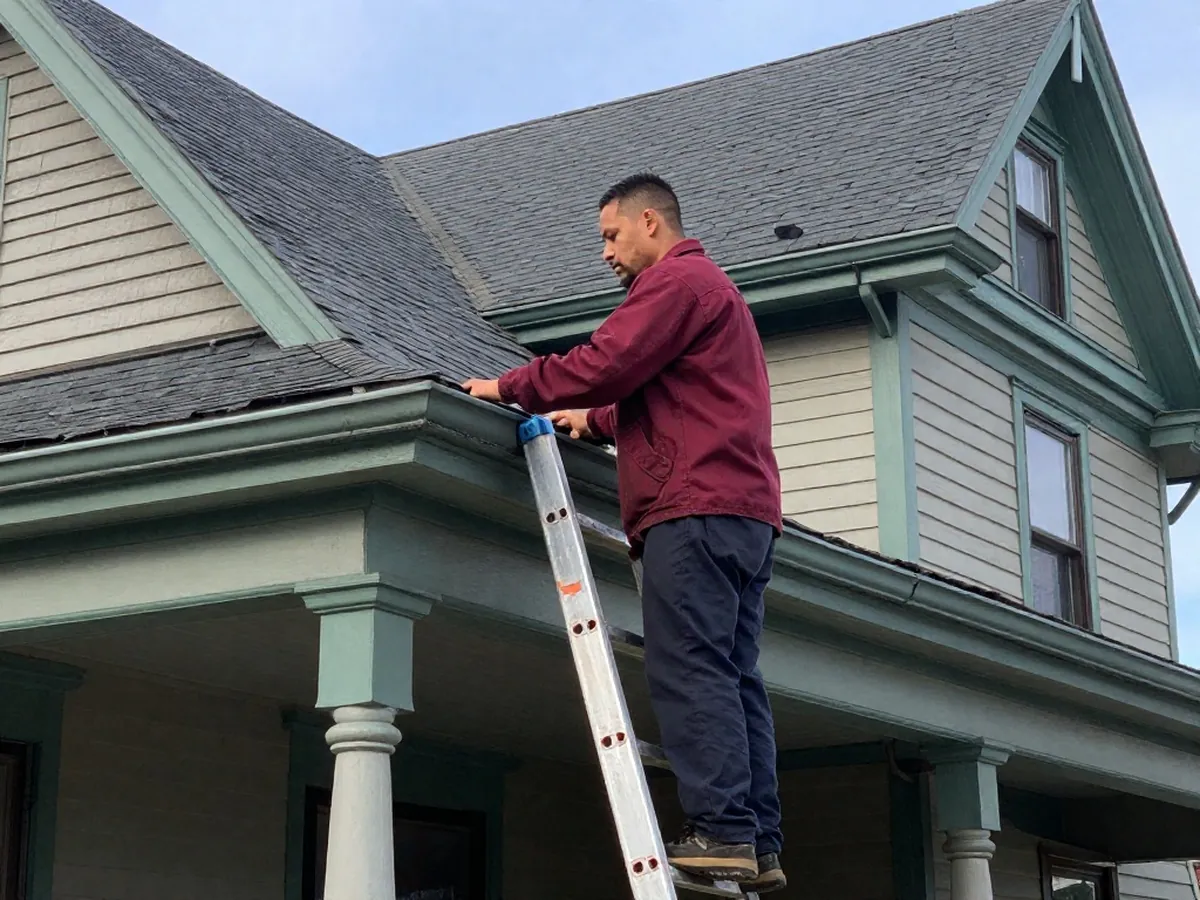
Stop and get safe if
- A ladder anywhere near an overhead wire: stay at least ten feet clear, and if a line looks damaged, PSE&G's number is 1-800-436-7734.
- A roof that is wet, frosty or covered in leaves: do not climb. Look from the ground.
- A stained or sagging ceiling below the roof you came to check: stay out of that spot and make the 911 call if the ceiling comes down.
- A ladder on soft ground, or no second person holding it: keep both feet on the ground and wait.
What gets looked at, in the order it happens
- Ground firstthe whole roof from the lawn and the street, then from the corners of the house. Shingle color, bare patches, bent metal and sagging lines show from there.
- Up next, if neededa closer look at the edges and the flashing from a ladder.
- Then insidethe attic hatch, a flashlight, and the underside of the boards.
- Lasta summary, ideally written, of what is urgent, what is watchable and what is fine.
Where the trouble starts
- A storm just passed and shingle pieces are lying in the yard
- A ceiling stain that comes and goes with the weather
- A house bought recently, with no record of the roof's age or past repairs
- A slate roof that has gone five to seven years without a specialist's look
- Gutters overflowing even though they look clear
Short answers
- How urgent is it to get a roof looked at, out of ten?
At 8 to 10 you have a wire down, a bulging ceiling or water at a fixture, and 911 or PSE&G comes first. At 4 to 7 a stain keeps returning or shingles went missing in wind, so call (973) 358-8198 within the week. A 1 to 3 is an older roof with nothing wrong, where the look is routine.
- What can I check without a ladder?
The asphalt roofing trade group's advice after Superstorm Sandy was to start by looking from the lawn or through an upstairs window, binoculars in hand if you own a pair. Look for missing, loose or cracked shingles, bent flashing and clogged gutters or vents. Then check the attic side of the boards for stains.
- What does the attic say about the roof?
Dark streaks on the underside of the boards, damp insulation or daylight at the edges point to leaks. UMass building researchers list attic hatches, bath fans, chimneys and light fixtures as places warm air leaks up, which matters for ice in winter.
- How often does a slate roof get looked at?
The National Park Service recommends an inspection by people experienced with slate every five to seven years, looking from the ground with binoculars or riding a lift. If someone does have to walk it, ladders laid over the ridge spread the weight, and soft-soled shoes help.
- Does an inspection call cover the towns near Montclair?
Yes. The line serves seven towns, from Glen Ridge roofing to Little Falls roofing. Dial (973) 358-8198 and name your street.
The attic view
The picture is taken from the attic hatch: a flashlight beam running along the underside of the roof boards, a pink slab of insulation and one darker streak on a board. That streak is the kind of sign an inspector follows uphill toward the leak.
The attic is a rendered scene, not a photograph of a real one.
On a visit
- Call (973) 358-8198 and say what prompted the look: a storm, a stain or the age of the roof; the contractor can then arrange a visit.
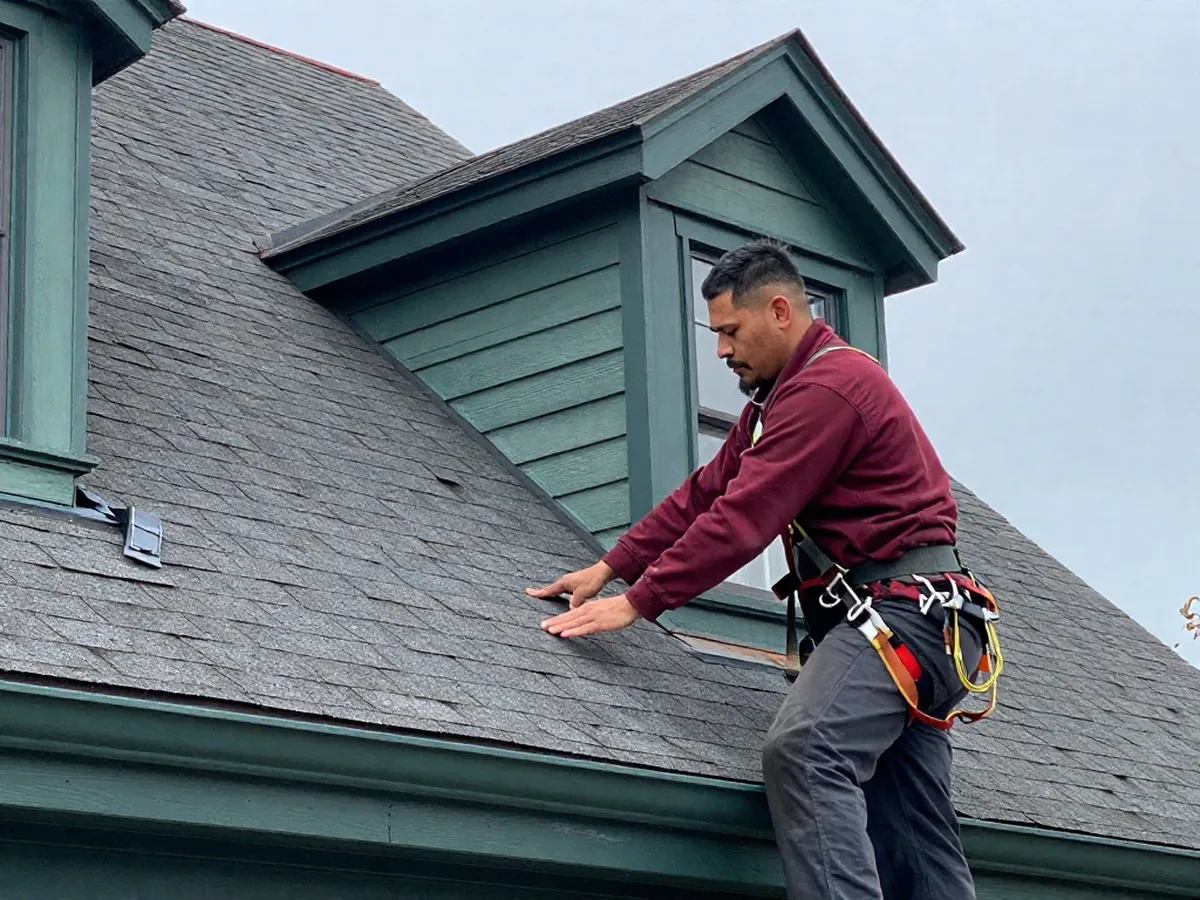
- The ground pass: ridge, edges, chimney and vent pipes, with binoculars if a ladder is not needed.
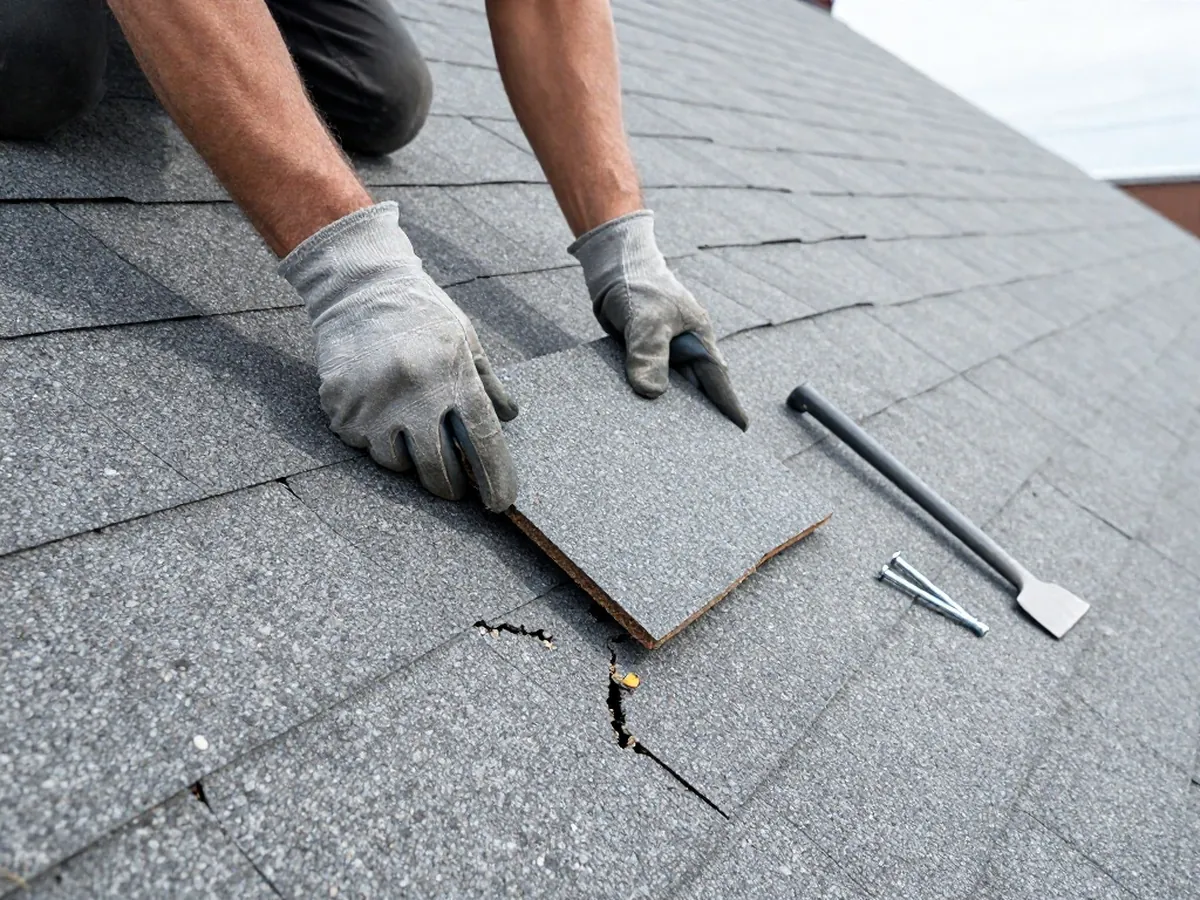
- A closer look at shingle wear, lifted tabs, cracking and grit loss.
- Flashing and gutters, which the asphalt roofing trade group calls the most vulnerable points.
- The attic: the underside of the boards, insulation, and the openings where warm air leaks up.
- A written summary of what was found, in the order of what matters, and the paperwork question for your house type.
What to do with the findings
- Sort the list into three piles: now, this season, someday.
- Ask for photographs with each item, so you can see what the roofer saw.
- If the list is long, ask what happens if only the top item is done.
- Keep the report with the house papers, whatever you decide.
- Book the repair, or set a date to look again after the next hard rain.
Who needs to hear about the result?
A look at a roof is not construction work, and the report is yours to keep or share. What follows is another matter. On a one- or two-family house with no shared walls, the state's ordinary-maintenance list covers repair or replacement of roof covering, though the state notice is silent on structure and decking.
Which office handles what, town by town, is laid out on the rules page.
More roof jobs
Sources Asphalt Roofing Manufacturers Association, Assessing roof damage after Superstorm Sandy (7 Nov 2012) NIOSH, Falls from ladders are preventable (reviewed 1 Mar 2024) National Park Service, The Repair, Replacement, and Maintenance of Historic Slate Roofs (Preservation Brief, 1993) UMass Amherst Building and Construction Technology, Preventing ice dams (2011) FEMA, Asphalt Shingle Roofing for High Wind Regions, Technical Fact Sheet No. 7.3 (Dec 2010) U.S. Department of Energy, Repairing Roofs and Ceilings technical brief (Jan 2006) Building America Solution Center (U.S. DOE), Construct roofs and attics for ice dam prevention (6 Dec 2022)
Describe the roof, then dial.
Before you call (973) 358-8198, find the street address, note which room shows water and jot down roughly how old the roof is. Tenants: the owner arranges roof work, so the landlord hears about it first. Towns: Montclair, Glen Ridge, Bloomfield, West Orange, Cedar Grove, Clifton, Little Falls.