Stains, lifted shingles and wind damage in Montclair
Roof Repair in Montclair, NJ
Is it one bad shingle or a roof giving out? Repair work in Montclair, NJ usually starts with a brown ceiling patch, a shingle in the grass or a thread of daylight in the attic. Next step: call (973) 358-8198 and name the room with the stain and how old the roof is.
Stop and get safe if
- Water running down a light fixture or into an outlet: leave the room, touch nothing and phone 911 from a dry spot.
- A ceiling bellied out or sagging with water: nobody stands beneath it, and 911 gets the call.
- A wire on the ground or dangling near the house is live until PSE&G says otherwise: stay 30 feet back and phone 911, or PSE&G's line, 1-800-436-7734.
- Shingles that are wet, iced or steeply pitched: skip the climb. Dial 911 only if someone has already come off the roof.
Day one, next rain, next week
- Day onephotograph the stain with something in the frame for scale, write the date beside it and trace its edge in pencil. Put a bucket or towel under any drip.
- Next dry daylook along the ridge, the edges and around the chimney from the lawn, with binoculars if you own a pair. Then take a flashlight up to the attic hatch.
- Next rainsee whether the pencil line moved. A line that held is a different problem from one that grew.
- Within the weekcall (973) 358-8198 with the photos and the answer to that last question.
Where the trouble starts
- Shingles at the end of their life: cracked, curled or shedding grit
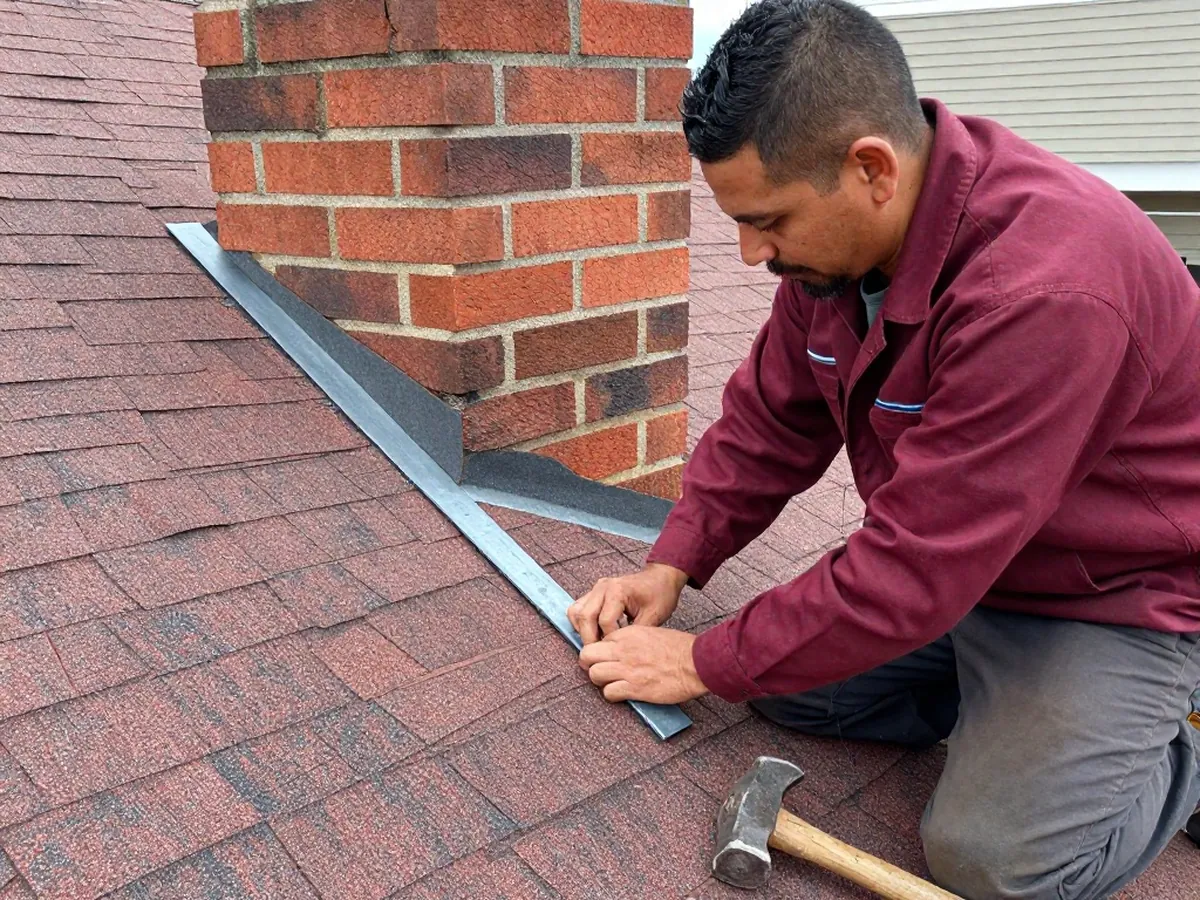
- Flashing at a chimney, wall or vent pipe that rusted or pulled away
- Wind that broke a sealant strip, so the loose tab flaps and cracks
- Nails that backed out and lifted the shingle above them
- Roof boards softened by a slow old leak, so new shingles sit on a weak base
Short answers
- How urgent is a roof leak, by your number out of ten?
At 8 to 10, there is water at a fixture, a bulging ceiling or a wire down; get out and phone 911 or PSE&G. At 4 to 7, expect a stain that grows with each rain, so call (973) 358-8198 within the week. At 1 to 3, the stain has stopped growing or only one shingle has cracked: take a photo and keep watching.
- Can one shingle be swapped without redoing the roof?
Often. A Department of Energy repair brief repeats a trade rule: when work is needed on more than a tenth of a roof, price a new one. A roofer checks the neighbors of the broken shingle for the same cracking before saying it is isolated.
- Is a dry-looking ceiling the end of the story?
Not always. A ceiling can dry while the insulation above it stays soaked. The same Energy Department brief says wet insulation comes out and wood has to read under 20 percent moisture before it is covered. A musty attic is worth mentioning on the call.
- Why do roofers fuss over nails versus staples?
FEMA's high-wind fact sheet says to use roofing nails rather than staples, and to check that the sealant strips have sealed down once the sun warmed them. A shingle that never sealed lifts in the next gust, so ask the roofer which fasteners go in.
- Does a repair call cover Glen Ridge and Bloomfield too?
Yes. The same local contractor takes calls from Montclair and six towns around it, among them Glen Ridge roofing, Bloomfield roofing and West Orange roofing. Your move: call (973) 358-8198 from any of them.
One shingle, start to finish
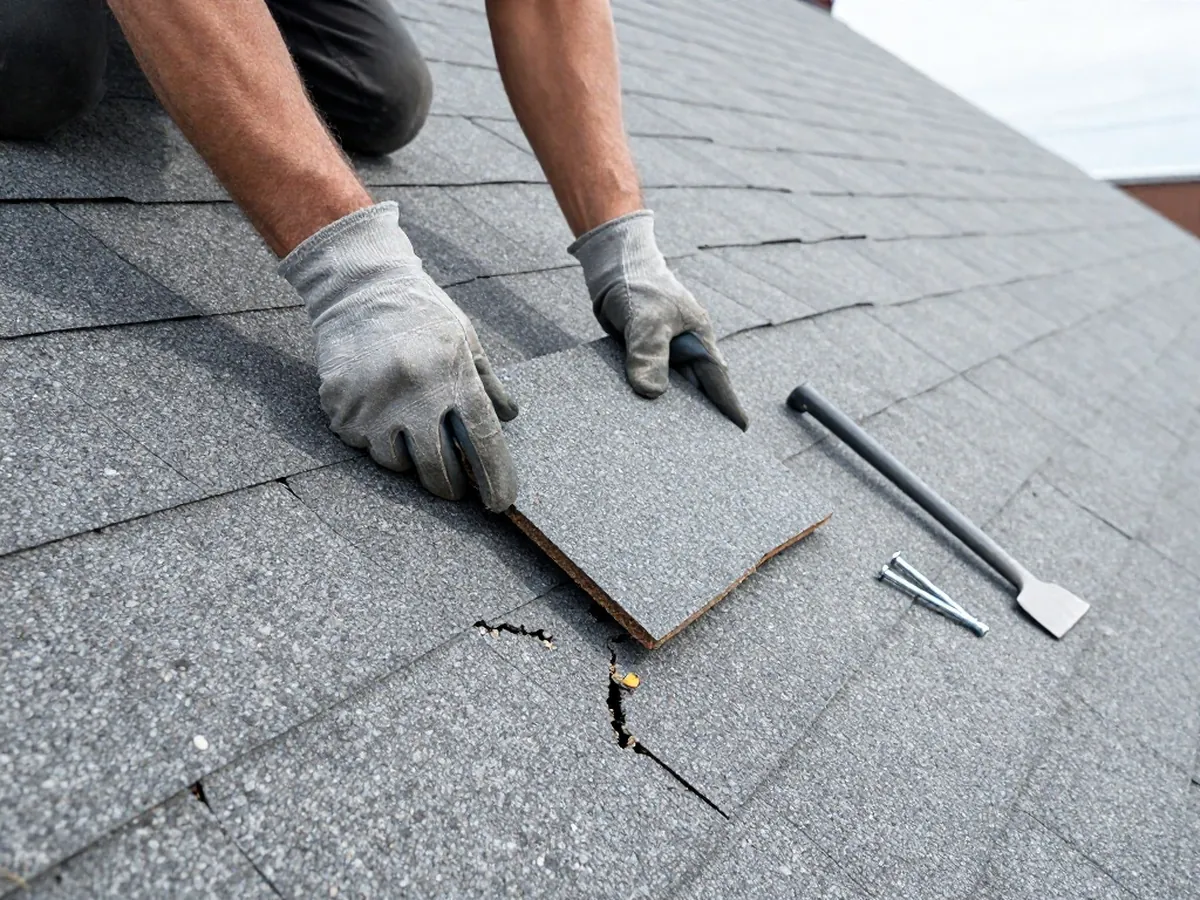
The picture shows the basic move behind most repairs. The tab above the damaged shingle is lifted, the nails come out and the broken piece slides out. The new shingle goes in under the same tab and is nailed high enough that the next row hides the nail heads.
FEMA's high-wind fact sheet calls for roofing nails, not staples, and for a check that the sealant strip has sealed down once the sun warms it. It is a rendered scene, not a photo of a particular job.
On a visit
- Call (973) 358-8198 and describe the stain, the room under it and the roof's age; the contractor can then book a look.
- The outside pass: ridge, edges, valleys, chimney and vent pipes, first from the ground and then from a ladder.
- The attic side: roof boards, insulation and any dark streaks that trace uphill from the stain.
- Flashing and gutters, the two joints that let water in beside a roof that otherwise looks sound.
- A plain explanation of the choices: patch, partial repair, or a talk about replacement.
- A question about paperwork: whether the job counts as ordinary maintenance for your house type or needs a word with the township.
Patch, partial, or plan the bigger job
- Count the problem spots from the lawn. Under about a tenth of the roof, a repair is the usual route.
- Check the age. A roof near the end of its run is a poor place to keep spending.
- Look at the pattern. The same spot leaking after each repair points to flashing or boards, not shingles.
- Ask the roofer to put the repair price and the replacement price in writing, side by side.
- Pick one, or wait. A stain that has stopped can be watched for a season.
Does a patch need paperwork?
Short version for a one- or two-family house with no shared walls: the state building code lists repairing roof covering as ordinary maintenance, so the township asks for no application and sends no inspector. The code's standards for how the work is done still apply.
The state notice does not mention rowhouses, townhouses or condos, so a call to the township office settles those. Contractor registration, written contracts and each town's office are collected on the rules page.
More roof jobs
Sources U.S. Department of Energy, Repairing Roofs and Ceilings technical brief (Jan 2006) FEMA, Asphalt Shingle Roofing for High Wind Regions, Technical Fact Sheet No. 7.3 (Dec 2010) Asphalt Roofing Manufacturers Association, Assessing roof damage after Superstorm Sandy (7 Nov 2012) NJ Department of Banking and Insurance, Guidance on filing insurance claims for storm-related damage PSE&G, Downed power lines FEMA, Tips for safely returning to a fire- or flood-damaged home (13 Jul 2024) NJ Department of Community Affairs, Significant changes to minor work and ordinary maintenance (5 Mar 2018)
Describe the roof, then dial.
Before you call (973) 358-8198, find the street address, note which room shows water and jot down roughly how old the roof is. Tenants: the owner arranges roof work, so the landlord hears about it first. Towns: Montclair, Glen Ridge, Bloomfield, West Orange, Cedar Grove, Clifton, Little Falls.